
Digital Twin & Simulation Platforms
Enabling Predictive Engineering & Intelligent Decision Making
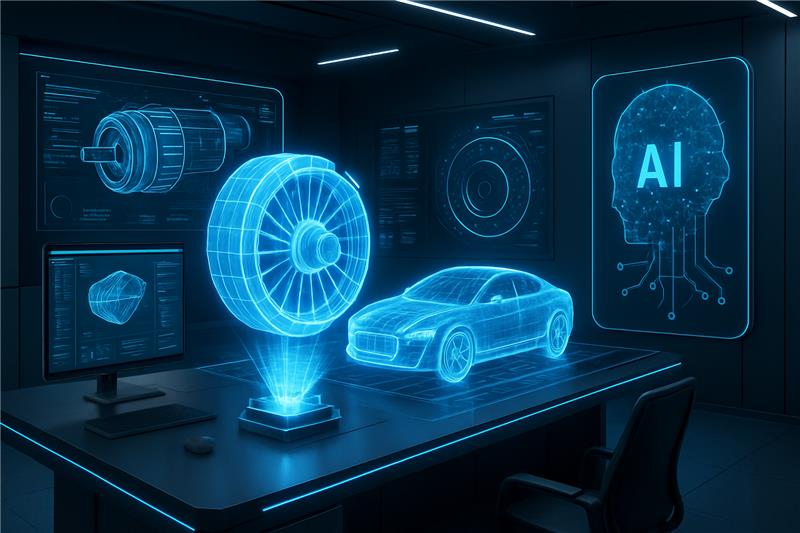
Modern engineering requires more than static models. Digital twin and simulation platforms create dynamic, interactive environments that replicate real-world systems, enabling continuous monitoring, analysis, and optimization.
Our solutions allow organizations to build intelligent digital replicas of physical assets, enabling predictive maintenance, advanced simulation, and what-if scenario analysis across the product lifecycle.
Use Cases
Interactive Digital Twin Environments
Digital twins provide a real-time, virtual representation of physical systems, enabling engineers to visualize and interact with assets in a controlled digital environment.
These environments continuously integrate data from design models and operational systems, ensuring accurate and up-to-date system representation.
Outcome:
- Real-time visibility into system behavior
- Improved understanding of complex systems
- Enhanced monitoring and control
Predictive Maintenance & Performance Monitoring
By combining simulation models with real-time data, digital twins enable predictive maintenance strategies that anticipate issues before they occur.
Engineers can monitor performance trends, detect anomalies, and schedule maintenance proactively to avoid downtime and failures.
Outcome:
- Reduced unplanned downtime
- Lower maintenance costs
- Improved asset reliability and lifespan
Advanced Simulation & What-If Analysis
Simulation platforms allow engineers to test scenarios and evaluate system behavior under different conditions without impacting real-world operations.
For example, engineers can perform what-if analysis to understand how design changes, load variations, or environmental factors will affect performance.
Outcome:
- Better design and operational decisions
- Reduced risk through virtual testing
- Faster iteration and validation cycles
Integrated Engineering & Lifecycle Insights
Digital twin platforms connect with CAD, CAM, CAE, and PLM systems to create a unified view of the product lifecycle.
This integration ensures that insights from simulation and real-world performance continuously inform design improvements and operational strategies.
Outcome:
- Continuous feedback loop between design and operations
- Improved lifecycle management
- Data-driven engineering decisions